May 1944: the shadow of the retreat over the Comino Valley
In May 1944, the Comino Valley hung in the balance between hope and terror. Whilst New Zealand troops were marching victoriously into the Atina area, bringing with them the scent of freedom, the retreating Nazi army left behind a trail of blood, violence and atrocities against civilians.
In Gallinaro, that turning point in history cost the lives of two young men in their early twenties, whose only ‘crime’ was being in the wrong place at the darkest hour.
Cleto Caira: the breeze rustling through the ears of corn
The first story takes place on 28 May 1944 on the hill of Rio Molle, just up here, behind the monument.
Cleto Caira is only 23 years old. He is a tailor from Atina, with a wife and a small child of just two years old waiting for him at home. Together with some friends, he decides to hide among the wheat fields on the hillside. They don’t want to fight; they just want to watch. They want to see with their own eyes the end of a nightmare: the Germans leaving.
But fate takes the form of a sudden twist of nature. A sudden gust of wind closes in on them. The wheat sways, the ears of corn sway and reveal their presence to the German soldiers. Without a moment’s hesitation, with cowardly ferocity, the soldiers open fire with machine-guns.
Cleto’s friends were wounded, but for him there was no escape: he was fatally struck. What makes it all the more heart-rending is the haste with which the burial took place following those turbulent events: a later account will recount that Cleto was buried when, perhaps, his young heart had not yet stopped beating entirely.
Gerardo Arpino: the ordeal in the cellar and a child’s courage
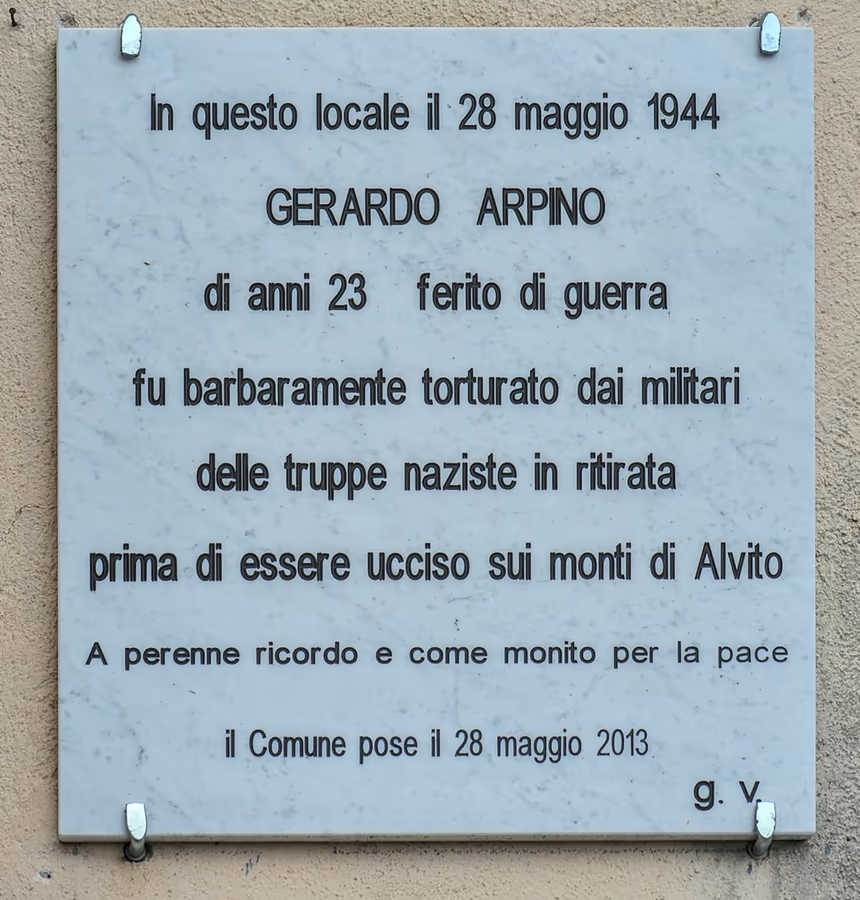
Whilst the hill of Rio Molle bears witness to Cleto’s sacrifice, the village centre was the scene of the martyrdom of Gerardo Arpino, who was also just 23 years old. The cellar you see today, where the memorial plaque is affixed, was the site of his ordeal.
Gerardo is a young man who already bears the scars of war: he limps noticeably because of several bullets that remain lodged in his legs. When two German soldiers capture him, they drag him towards the cellar with unprecedented violence, forcing him to keep up with their rapid pace, heedless of his disability.
All this takes place before the eyes of his grandson, Cesidio, a boy of just seven years old. At that moment, something incredible happens: with the desperate courage that only love and innocence can provide, little Cesidio begins kicking the two German torturers, barefoot, in an impossible attempt to defend his uncle.
The soldiers shove him aside, open the door and throw Gerardo inside. But Cesidio does not give up. He climbs up to that small window and from there is forced to witness the horror: his uncle is stripped, whipped and tortured in unspeakable ways. They only let him get dressed again when he has barely a breath left.
Gerardo’s martyrdom then shifted to the mountains of Alvito. With him is his brother-in-law, Giuseppe Marcantuoni, who manages to find an opening during the night and escape. Gerardo does not. Gerardo does not even try: he is too exhausted by the torture, he no longer has the physical strength to flee, perhaps he no longer even has the strength to escape death.
He was killed up there. The Nazis even denied him the honour of a proper burial, and his body was never returned to his loved ones.
Lest we forget
Cleto Caira and Gerardo Arpino were the same age – 23 – and had the same right to look forward to the future that was unfolding just a few kilometres away from them.
Today, reciting their names before their memorials is not merely an act of respect for their sacrifice, but a duty to preserve a memory that the winds of Rio Molle and the silence of that cellar have never managed to erase.